Your algorithm knows what you want before you do.
It’s just the business model.
Right now, your phone is building a digital voodoo doll of your life. Every scroll. Every pause. Every 2 a.m. rabbit hole. It’s all being packaged, analyzed, and weaponized against you.
And the worst part? You paid for it.
This Started 100 Years Ago
Edward Bernays was Sigmund Freud’s nephew. He studied psychology and saw profit potential.
Before Bernays, advertising was simple. “Buy soap. It cleans.”
After Bernays, it became “Buy soap and someone will love you.”
He turned your unconscious desire into a spreadsheet. Sex. Power. Belonging. All of it could be sold.
He made women smoke by calling cigarettes “torches of freedom.”
He made bacon and eggs the American breakfast because a meat company paid him.
He even convinced the public to overthrow a government because a fruit company wanted cheaper bananas.
That was the 1920s.
Now apply that to AI that knows your exact emotional state at 3 a.m.
Welcome to the Laboratory
You are the experiment.
There’s no lab coat. No clipboard. No ethics board.
Just algorithms running billions of tests on your attention span. Every scroll is data. Every like is a variable. Every recommendation triggers your dopamine response.
You think you’re making choices. You’re being tested.
The difference between you and a lab rat is that the rat doesn’t believe it’s free. You do. That’s why it works.
In 1953, psychologist B.F. Skinner created a box. Rats inside. A lever. Food pellets when they pushed it.
But here’s the trick. He didn’t reward every push. Sometimes yes. Sometimes no.
When the rat didn’t know if the next push would bring food, it became obsessed. Pushing constantly. Frantically. Just in case.
That’s variable reinforcement. The most addictive psychological mechanism ever discovered.
Your phone uses it.
Your order has shipped. Your crush is typing. You might also like.
Every notification is a lever. Every dopamine hit is unpredictable. So you keep checking.
You Can’t Focus Because You’re Being Hacked
Can’t read a book without checking your phone? That’s by design.
Can’t sit in silence? That’s intentional.
Can’t watch a movie without looking up the actor’s net worth mid-scene? You’ve been trained.
Modern apps don’t get more useful. They get more addictive.
New stories. Reels. Filters. Animations. Bursts of novelty are designed as psychological triggers.
It’s digital fast food. Quick hits. Zero nutrition. The longer you consume it, the more your mind starves.
Dopamine doesn’t care what you’re doing. It’s just the chemical hype man for your worst habits.
The Illusion of Choice
Netflix asks: “What do you want to watch?”
What they mean: “Choose from what we’ll let you choose from.”
Instagram asks: “Who do you want to be?”
What they mean: “Pick your aesthetic so we can show you who’s doing it better and make you feel inferior.”
Amazon says: “Buy whatever you want.”
What they mean: “Every search leads to the same four brands anyway.”
You have unlimited options. Every path leads to the same place. Your wallet.
It’s a carnival funhouse. Mirrors everywhere. Each one shows a version of you making a purchase.
Here’s Where the Dystopia Gets Real
In 2012, Facebook experimented on you without permission. They tweaked news feeds to be slightly more negative. They measured if people would start posting negatively too.
They could. So they did. They referred to it as “emotional contagion.”
They weren’t studying you. They were conditioning you.
You clicked “accept terms,” so they had legal cover.
Fast forward to now. Every headline screams emergency. Every comment section is a war zone. Every day feels like your anxiety is being deliberately cranked up.
Why? Because outrage keeps you engaged. Fear keeps you scrolling. Envy keeps you comparing.
The system doesn’t care if you’re happy. It only cares that you keep reacting.
Why You’re Lonely While Being “Connected”
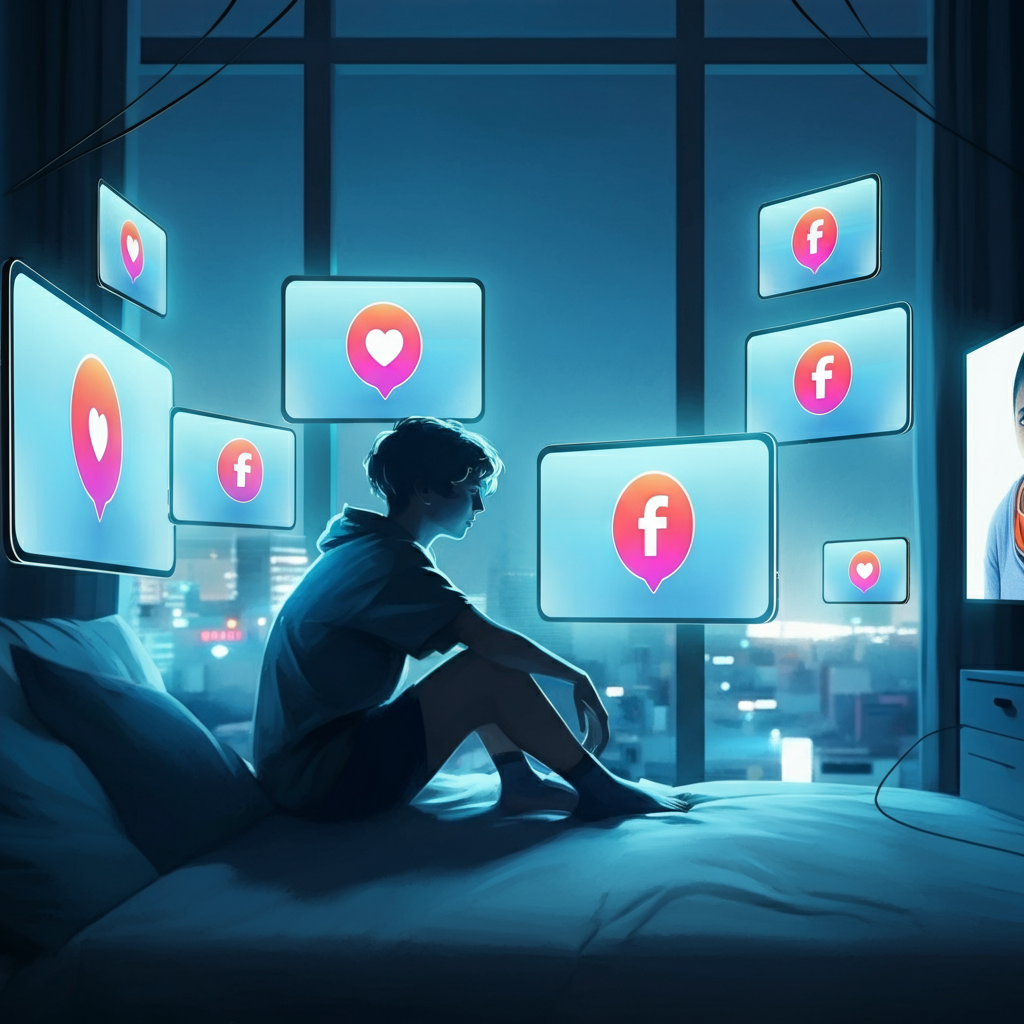
You have 800 followers and no one to call during a panic attack.
You have a thousand matches and no real dates.
You have infinite content and can’t find anything real.
That’s the experiment working perfectly.
Social media promised connection. It delivered conformity.
It promised freedom. It delivered dependence.
It promised control. You blame yourself for not optimizing hard enough.
You didn’t pick the right diet. The right app. The right morning routine.
So it’s your fault. Not the system’s.
They replaced control with culpability.
Your Identity Is Being Rebranded
You used to ask, “Who am I?”
Now you as,k “What should my personal brand be?”
You used to think about what gives life meaning.
Now you optimize how many people see your aesthetic.
Everything from your opinions to your humor gets filtered through systems designed to turn individuality into engagement.
We volunteered for this.
We handed over our data. Our preferences. Our insecurities. We did it with a smile.
We became collaborators in our own conditioning.
We’re rats helping design the maze.
The Results Are In
After 20 years of psychological data collection on billions of people, the results are clear.
We’re more connected. More informed. More stimulated.
We’re also lonelier. More anxious. More depressed. More disoriented.
Skyrocketing anxiety. Loneliness. Depression. Burnout.
Attention spans like goldfish. Sleep quality is collapsing. Empathy crashing.
That’s not an accident. That’s success. The experiment is working exactly as designed.
But Here’s the Twist
The experiment won’t end because the results are profitable.
You adapted. You adjusted. You made the cage look beautiful.
Productivity aesthetics. Minimalist desk setups. “What’s on my phone” videos.
You took your behavioral conditioning and turned it into content. You’re decorating your own prison.
You check Twitter every three minutes to make sure you still exist.
You can’t watch a scene without looking up the actor on IMDb.
You’re a lab rat who forgot which lever gives the pellet, but keeps pushing all of them anyway.
Love? Relationships? Those Got Hacked Too
Romance used to mean real intimacy. Commitment. Risk.
Now it’s an algorithm. A swipe. A profile picture.
You fall in love with fantasy. With someone you invented in your head based on their Instagram feed.
Every relationship starts with market research.
We curate digital versions of ourselves with scientific precision. We optimize. We tweak. We make the fake version perform better than the real one.
Imagine watching yourself through glass your whole life and mistaking the reflection for reality.
That’s what we’re doing.
What Will You Be When It’s Over?
The uncomfortable truth: The experiment isn’t failing.
It’s succeeding.
It’s showing exactly what happens when you expose a social species to endless novelty. Endless comparison. Endless stimulation without purpose or pause.
We’re learning what happens when comfort replaces meaning.
When convenience replaces connection.
When your attention becomes currency.
We didn’t evolve for this. We’re anxious because we’re overstimulated. We’re lonely because we’re overconnected.
The Thing Nobody Tries
Most people never do the quiet rebellion.
They never stop playing.
They never walk away from the noise.
They never let themselves be boring.
But you could.
You were already enough before you started trying to optimize.
You don’t need to become someone. You already are.
You don’t need to optimize your life. You can actually live it.
It might look strange at first. That’s because you’ve been trained to fear the only moment the algorithm can’t reach you.
Boredom. Silence. Stillness.
Here’s the Real Dystopia
Modern life is a slot machine with better graphics.
The only way to win is to stop playing.
But the machine keeps flickering. Screaming for your attention. It knows exactly which buttons to push.
Walking away feels like losing.
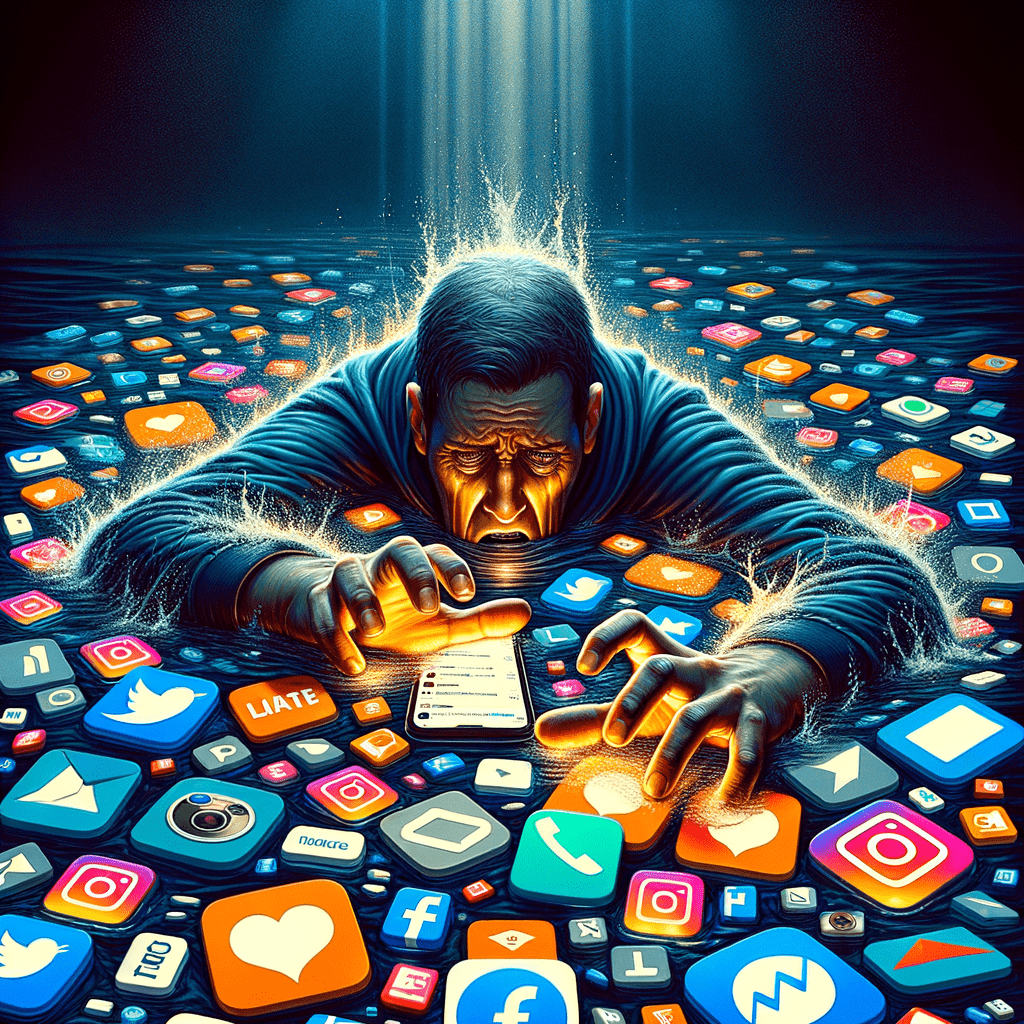
Staying feels like drowning but at least you’re drowning with your friends.
Most people don’t leave. They just keep pulling the lever.
Every purchase. Every goal. Another spin. The dopamine fades but the debt doesn’t.
The Quiet Exit
If you want out, here’s what it looks like.
Stop checking your phone for no reason. Turn off notifications. Your attention is the last thing you have that’s actually yours.
Read books. Boring ones. Ones nobody knows about.
Sit in silence. Not for an Instagram story. Just sit.
Call someone without planning the conversation. Show up at places without checking reviews first.
Be content without an audience.
Feel joy that doesn’t need to go viral.
This is the rebellion. It’s not dramatic. It won’t get you followers.
That’s why it works.
The system can’t sell silence. It can’t monetize boredom. It can’t profit from peace.
That’s where your freedom actually is.
Not in the illusion of choice between a thousand streaming services.
But in choosing none of them.
The Real Question
The experiment won’t end because the results are profitable.
The question isn’t when it will stop.
The question is, what will you be when you finally realize you can walk away?
Most people won’t. They’ll keep checking. Keep pushing. Keep optimizing.
But if you’re reading this, maybe you’re different.
Maybe you already sensed something was off.
Maybe your phone really does know what you’re thinking.
Maybe it’s time to find out who you are when nobody’s watching.
When nothing’s being measured.
When there’s no algorithm. No engagement metric. No audience.
Just you.
Bored out of your mind.
And somehow more alive than ever.
Your algorithm knows what you want before you do.
It’s just the business model.
Right now, your phone is building a digital voodoo doll of your life. Every scroll. Every pause. Every 2 a.m. rabbit hole. It’s all being packaged, analyzed, and weaponized against you.
And the worst part? You paid for it.
This Started 100 Years Ago
Edward Bernays was Sigmund Freud’s nephew. He studied psychology and saw profit potential.
Before Bernays, advertising was simple. “Buy soap. It cleans.”
After Bernays, it became “Buy soap and someone will love you.”
He turned your unconscious desire into a spreadsheet. Sex. Power. Belonging. All of it could be sold.
He made women smoke by calling cigarettes “torches of freedom.”
He made bacon and eggs the American breakfast because a meat company paid him.
He even convinced the public to overthrow a government because a fruit company wanted cheaper bananas.
That was the 1920s.
Now apply that to AI that knows your exact emotional state at 3 a.m.
Welcome to the Laboratory
You are the experiment.
There’s no lab coat. No clipboard. No ethics board.
Just algorithms running billions of tests on your attention span. Every scroll is data. Every like is a variable. Every recommendation triggers your dopamine response.
You think you’re making choices. You’re being tested.
The difference between you and a lab rat is that the rat doesn’t believe it’s free. You do. That’s why it works.
In 1953, psychologist B.F. Skinner created a box. Rats inside. A lever. Food pellets when they pushed it.
But here’s the trick. He didn’t reward every push. Sometimes yes. Sometimes no.
When the rat didn’t know if the next push would bring food, it became obsessed. Pushing constantly. Frantically. Just in case.
That’s variable reinforcement. The most addictive psychological mechanism ever discovered.
Your phone uses it.
Your order has shipped. Your crush is typing. You might also like.
Every notification is a lever. Every dopamine hit is unpredictable. So you keep checking.
You Can’t Focus Because You’re Being Hacked
Can’t read a book without checking your phone? That’s by design.
Can’t sit in silence? That’s intentional.
Can’t watch a movie without looking up the actor’s net worth mid-scene? You’ve been trained.
Modern apps don’t get more useful. They get more addictive.
New stories. Reels. Filters. Animations. Bursts of novelty are designed as psychological triggers.
It’s digital fast food. Quick hits. Zero nutrition. The longer you consume it, the more your mind starves.
Dopamine doesn’t care what you’re doing. It’s just the chemical hype man for your worst habits.
The Illusion of Choice
Netflix asks: “What do you want to watch?”
What they mean: “Choose from what we’ll let you choose from.”
Instagram asks: “Who do you want to be?”
What they mean: “Pick your aesthetic so we can show you who’s doing it better and make you feel inferior.”
Amazon says: “Buy whatever you want.”
What they mean: “Every search leads to the same four brands anyway.”
You have unlimited options. Every path leads to the same place. Your wallet.
It’s a carnival funhouse. Mirrors everywhere. Each one shows a version of you making a purchase.
Here’s Where the Dystopia Gets Real
In 2012, Facebook experimented on you without permission. They tweaked news feeds to be slightly more negative. They measured if people would start posting negatively too.
They could. So they did. They referred to it as “emotional contagion.”
They weren’t studying you. They were conditioning you.
You clicked “accept terms,” so they had legal cover.
Fast forward to now. Every headline screams emergency. Every comment section is a war zone. Every day feels like your anxiety is being deliberately cranked up.
Why? Because outrage keeps you engaged. Fear keeps you scrolling. Envy keeps you comparing.
The system doesn’t care if you’re happy. It only cares that you keep reacting.
Why You’re Lonely While Being “Connected”
You have 800 followers and no one to call during a panic attack.
You have a thousand matches and no real dates.
You have infinite content and can’t find anything real.
That’s the experiment working perfectly.
Social media promised connection. It delivered conformity.
It promised freedom. It delivered dependence.
It promised control. You blame yourself for not optimizing hard enough.
You didn’t pick the right diet. The right app. The right morning routine.
So it’s your fault. Not the system’s.
They replaced control with culpability.
Your Identity Is Being Rebranded
You used to ask, “Who am I?”
Now you as,k “What should my personal brand be?”
You used to think about what gives life meaning.
Now you optimize how many people see your aesthetic.
Everything from your opinions to your humor gets filtered through systems designed to turn individuality into engagement.
We volunteered for this.
We handed over our data. Our preferences. Our insecurities. We did it with a smile.
We became collaborators in our own conditioning.
We’re rats helping design the maze.
The Results Are In
After 20 years of psychological data collection on billions of people, the results are clear.
We’re more connected. More informed. More stimulated.
We’re also lonelier. More anxious. More depressed. More disoriented.
Skyrocketing anxiety. Loneliness. Depression. Burnout.
Attention spans like goldfish. Sleep quality is collapsing. Empathy crashing.
That’s not an accident. That’s success. The experiment is working exactly as designed.
But Here’s the Twist
The experiment won’t end because the results are profitable.
You adapted. You adjusted. You made the cage look beautiful.
Productivity aesthetics. Minimalist desk setups. “What’s on my phone” videos.
You took your behavioral conditioning and turned it into content. You’re decorating your own prison.
You check Twitter every three minutes to make sure you still exist.
You can’t watch a scene without looking up the actor on IMDb.
You’re a lab rat who forgot which lever gives the pellet, but keeps pushing all of them anyway.
Love? Relationships? Those Got Hacked Too
Romance used to mean real intimacy. Commitment. Risk.
Now it’s an algorithm. A swipe. A profile picture.
You fall in love with fantasy. With someone you invented in your head based on their Instagram feed.
Every relationship starts with market research.
We curate digital versions of ourselves with scientific precision. We optimize. We tweak. We make the fake version perform better than the real one.
Imagine watching yourself through glass your whole life and mistaking the reflection for reality.
That’s what we’re doing.
What Will You Be When It’s Over?
The uncomfortable truth: The experiment isn’t failing.
It’s succeeding.
It’s showing exactly what happens when you expose a social species to endless novelty. Endless comparison. Endless stimulation without purpose or pause.
We’re learning what happens when comfort replaces meaning.
When convenience replaces connection.
When your attention becomes currency.
We didn’t evolve for this. We’re anxious because we’re overstimulated. We’re lonely because we’re overconnected.
The Thing Nobody Tries
Most people never do the quiet rebellion.
They never stop playing.
They never walk away from the noise.
They never let themselves be boring.
But you could.
You were already enough before you started trying to optimize.
You don’t need to become someone. You already are.
You don’t need to optimize your life. You can actually live it.
It might look strange at first. That’s because you’ve been trained to fear the only moment the algorithm can’t reach you.
Boredom. Silence. Stillness.
Here’s the Real Dystopia
Modern life is a slot machine with better graphics.
The only way to win is to stop playing.
But the machine keeps flickering. Screaming for your attention. It knows exactly which buttons to push.
Walking away feels like losing.
Staying feels like drowning but at least you’re drowning with your friends.
Most people don’t leave. They just keep pulling the lever.
Every purchase. Every goal. Another spin. The dopamine fades but the debt doesn’t.
The Quiet Exit
If you want out, here’s what it looks like.
Stop checking your phone for no reason. Turn off notifications. Your attention is the last thing you have that’s actually yours.
Read books. Boring ones. Ones nobody knows about.
Sit in silence. Not for an Instagram story. Just sit.
Call someone without planning the conversation. Show up at places without checking reviews first.
Be content without an audience.
Feel joy that doesn’t need to go viral.
This is the rebellion. It’s not dramatic. It won’t get you followers.
That’s why it works.
The system can’t sell silence. It can’t monetize boredom. It can’t profit from peace.
That’s where your freedom actually is.
Not in the illusion of choice between a thousand streaming services.
But in choosing none of them.
The Real Question
The experiment won’t end because the results are profitable.
The question isn’t when it will stop.
The question is, what will you be when you finally realize you can walk away?
Most people won’t. They’ll keep checking. Keep pushing. Keep optimizing.
But if you’re reading this, maybe you’re different.
Maybe you already sensed something was off.
Maybe your phone really does know what you’re thinking.
Maybe it’s time to find out who you are when nobody’s watching.
When nothing’s being measured.
When there’s no algorithm. No engagement metric. No audience.
Just you.
Bored out of your mind.
And somehow more alive than ever.
Leave A Comment
Table of content
- This Started 100 Years Ago
- Welcome to the Laboratory
- You Can’t Focus Because You’re Being Hacked
- The Illusion of Choice
- Here’s Where the Dystopia Gets Real
- Why You’re Lonely While Being “Connected”
- Your Identity Is Being Rebranded
- The Results Are In
- But Here’s the Twist
- Love? Relationships? Those Got Hacked Too
- What Will You Be When It’s Over?
- The Thing Nobody Tries
- Here’s the Real Dystopia
- The Quiet Exit
- The Real Question