 File no. 043
Everyone Wants to Be Special. That’s the Most Average Thing About Us.
My generation in Lebanon was told to work hard, be yourself and be different. We tried all three during a blackout.
 Sergio Aoun
Essay, 1,711 words
In this essay
It’s 4:30am in Beirut. The state electricity left hours ago, the generator cut out at midnight, and you’re lying in the dark on 14% battery. On your screen, a tanned man in Dubai is telling you that sleep is for the average. He has a cold plunge, and you have a bucket and a water tank that fills when it feels like it.
According to him, you’re different, and most people won’t do what it takes. You nod along from under the blanket. In your country, doing what it takes means lining up at an ATM that rations your own savings back to you.
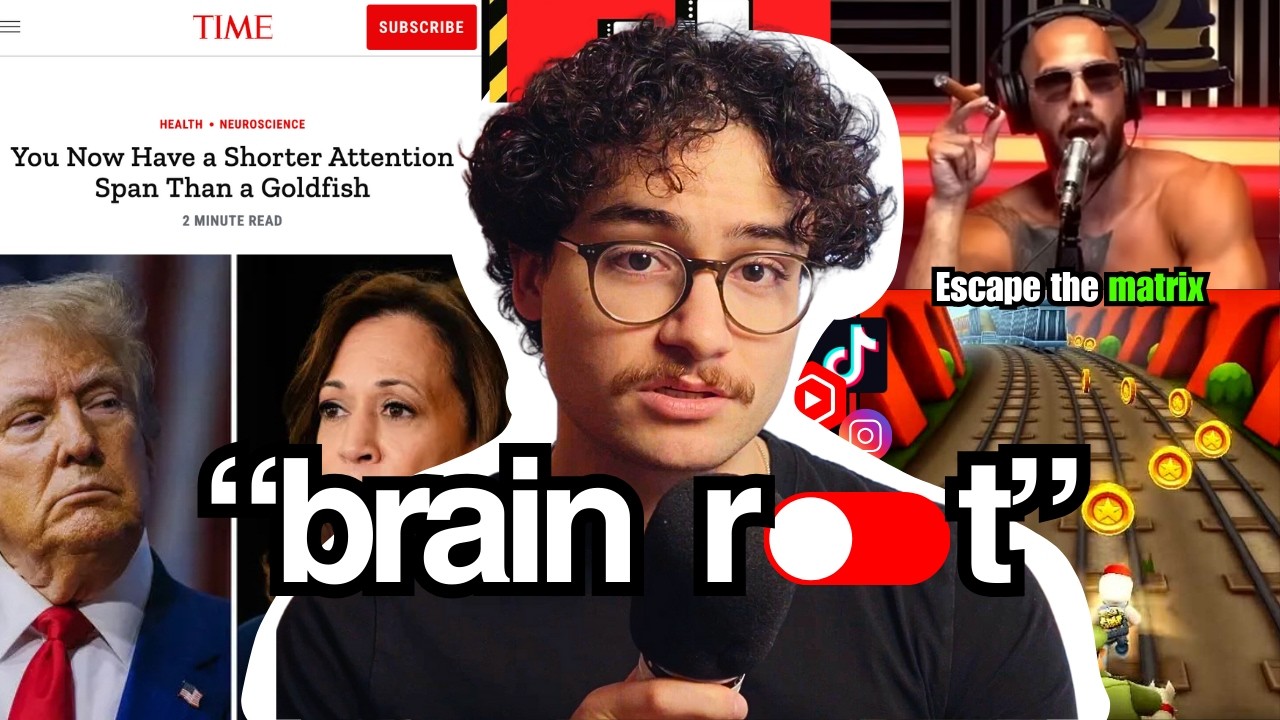
This essay is my reflection on a perspective from Angelo Somers. It mostly grew out of his videos The Fear of Being Average and the violent desire to be “great.” He planted the idea, and Beirut did the rest.
The gospel of being different
My generation grew up on three commandments. Work harder than everyone, be yourself, and above all be different. Nobody noticed that the third one cancels the second, so we obeyed all three at once.
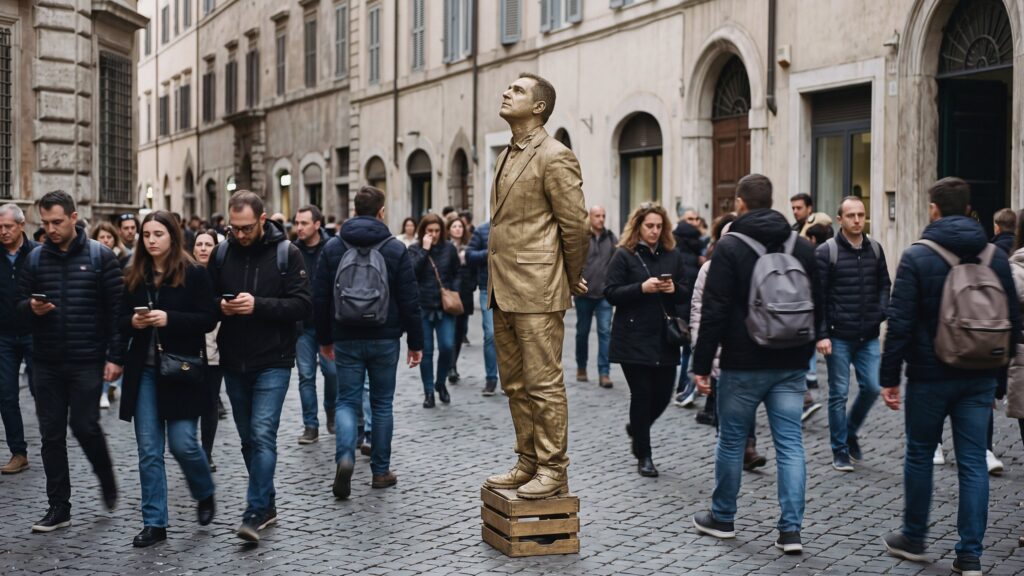
Open any feed and watch the congregation. An endless scroll of young men swear they’re not like the others, in the same voice, over the same phonk track. Each edit is black and white, with a Marcus Aurelius quote nobody finished reading. When one of them lands a job or hits a three-pointer, the caption reads “I’m him.” We brag by announcing we’re somebody else, and nobody finds that strange.
The kids caught on before we did. In 2019, LEGO and the Harris Poll surveyed 3,000 children aged 8 to 12 across three countries. In the US, 29% wanted to be YouTubers and 11% wanted to be astronauts. An astronaut wants to go where nobody has been. A YouTuber wants everyone already here to watch.
Our favorite pep talk is a horror film. In Whiplash, a 19-year-old drummer tells his family he’d rather die “drunk, broke at 34” if it gets people talking about him. Living rich and sober to 90, forgotten, sounds worse to him. The movie shows you what that kind of hunger costs. Plenty of us walked out of the cinema and set it as our wallpaper.
Everyone wants to be special. It’s the most average thing about us.
Anything but the middle, in a country that deleted the middle
Lebanon makes the joke darker. Hustle culture tells you not to settle for an average life. Fine, point me to one.
Before 2019, a dollar cost 1,507.5 lira, and today it costs around 89,500. Your parents’ version of average came with a salary, a car loan, a savings account and a summer week in Faraya. The banks ate the savings and the salary turned into pocket change. In most places, the middle is boring. Here it’s a museum exhibit with a sign that says “this used to be normal.”
So the advice to avoid being average lands in Beirut like advice to avoid catching the last train. The train left in 2019, and the banks were driving.
That leaves two exits, and both are popular. You either go viral or you go to the airport. The departures hall at Rafic Hariri airport has become the most honest monument to ambition in the country. Nobody posts the goodbye at the gate, but everybody posts the first coffee in Dubai.
All of this happens in a city where 2,750 tonnes of ammonium nitrate sat in a port warehouse for years. On August 4, 2020, it went off and killed more than 200 people. Six years later, no court has convicted anyone. Then a stranger online tells you the scariest thing in the world is mediocrity.
Why being ordinary feels like dying
Painters know a strange rule about subjects and backgrounds. A subject that blends into its background might as well not be in the painting. Life plays by the same rule, and so does a social life. A living thing spends every day staying distinct from the dead matter around it. The day it stops, we call it death.
That’s why “mid” stings so much. It sounds less like a grade and more like disappearing while you’re still breathing.
People used to get a part in life without auditioning for it. Your family, your faith, your trade and your village told you who you were. In Lebanon, that old map still runs. Meet a stranger and within minutes they’ve asked your family name and where your people are from. It feels nosy, but it’s also a coordinate system that places you before you’ve opened your mouth.
The catch is what the map offers you. In a lot of this country, the heroic role on offer is clapping for a za’im whose son will inherit your clapping. I’ve written about why Lebanon keeps clapping for the villain. So my generation rejected the map, and fair enough. The problem is we got nothing in return except a phone and the instruction to matter.
Matthew Perry described that bargain better than any guru. At 24, he knelt and prayed: “God, you can do whatever you want to me. Just please make me famous.” Three weeks later, he landed the part of Chandler Bing on Friends. He fought addiction for most of the years that followed, and later said God never forgot the first half of that prayer.
Your life, run like an ad account
I buy attention for a living. My working day runs on dashboards: reach, frequency, cost per lead, which ad made a stranger stop scrolling. It’s a sane way to run a campaign. It’s a terrible way to run a person.
Watch how we do it anyway, every evening, without a client paying for it. You post the sunset at Raouche and refresh the views every four minutes. Forty views and the evening is fine. Twelve and you start wondering what’s wrong with your face, your caption, your life. The rock has been standing in the sea for thousands of years. Your mood now depends on whether it got enough engagement.
Somewhere along the way the world turned into a mirror. Every room, every friend and every number became a surface where you check for yourself. The trap closes on itself. You wanted to stand out against the world, so you covered the world in mirrors. Now there’s no background left to stand out against, only you, reflected, everywhere, looking tired.
Two exits, one treadmill
The loud exit is the grind, and it has its own scripture. In a 2007 interview with Tavis Smiley, Will Smith explained what set him apart from everyone else in the room.
“The only thing that I see that is distinctly different about me is I’m not afraid to die on a treadmill.”
The grind crowd has quoted it like a verse ever since.
Bronnie Ware spent years as a palliative care nurse in Australia, sitting with patients in their last 12 weeks of life. She wrote down what they regretted. “I wish I hadn’t worked so hard” came second, and she said it came from every male patient she nursed. Her phrase for what those men regretted was “the treadmill of a work existence.” One man brags he isn’t afraid to die on the treadmill. A nurse sat with the men who did.
The quiet exit looks healthier from a distance. Stop trying, rot in bed, delete everything and call it peace. It’s the same fear wearing pajamas. One exit runs from being nobody, and the other runs from being anybody. Following the crowd and fleeing it turn out to be the same move, facing opposite directions.
Ask the creator who started this essay. He chased greatness, got a small dose of it, and said it felt like the dragon scroll in Kung Fu Panda. You finally open it, and it’s blank. Fame burns like flash paper, bright for a second and then nothing in your hand.
The only question worth keeping
If you want a way out of the hall of mirrors, try this question. What would you want to exist even if you didn’t?
Both exits are about you. This question points somewhere else, and that’s why it hurts to answer.
Cologne Cathedral is the best answer I know. Archbishop Konrad von Hochstaden laid its foundation stone on August 15, 1248. Work stalled in the 1500s and sat for close to three centuries. When it restarted in 1842, the builders worked from drawings made around 1300. They finished the towers in 1880, 632 years after the first stone. Whoever drew those plans never saw them built. Neither did their grandchildren, or theirs. None of them had a personal brand.
Find the thing you’d want in the world after you’re gone and let it use you up. Think of a clinic that stays open, a kid who reads, or a street that floods a little less every winter. Your name doesn’t have to be on it. Most of the good things in this country don’t have anyone’s name on them, and they’re the ones still working.
Make peace with the ordinary version of you
Everyone has a version of themselves they refuse to look at. For my generation, that version is the regular guy. The one with a normal job, a normal salary in a currency that holds still, and no audience. We’ve spent years running from him, and he’s gotten stronger every year we ran.
So ask the uncomfortable question out loud, at least once. What would it mean to love yourself if you were ordinary? Ordinary people fall in love, fix the neighbor’s water pump and raise kids who remember them. If that life counted, your ambitions would stop being a court case for your right to exist. You’d chase them because you like the chase.
Andrew in Whiplash wanted people at a dinner table to talk about him after he died. You already have that table, and you don’t have to die. It meets every Sunday at your grandmother’s. Twelve people sit around one bowl of tabbouleh, and every one of them is talking about you. Mostly about why you’re still not married.
■ Keep reading
More from the archive.


■ Notes from the Archive
Get the next essay by email.
One letter when a new essay is ready. No spam. Leave whenever you like.